
Beehive Air Therapy
There is something deeply reassuring about standing beside a healthy hive. The steady hum, the warm scent of wax and honey, the quiet industry of thousands of bees working as they always have—it connects us to a rhythm older than modern medicine. In recent years, that ancient world has offered up an unexpected idea: beehive air therapy.
It is not new, though it may feel that way. In parts of Eastern Europe, beekeepers have long believed that the air within a hive carries beneficial properties. Today, that tradition is quietly finding renewed interest among those looking for gentler, nature-rooted approaches to wellbeing.
What Is Beehive Air Therapy?
Beehive air therapy involves breathing air drawn indirectly or directly from an active hive, without disturbing the bees. A specially designed box or chamber channels the air through tubes or vents so that a person can sit nearby and inhale it safely, or lay above the hives on a specially designed bed and inhale the air around them, whilst feeling the gentle vibration of the bees below.
This air is naturally enriched with:
Volatile compounds from propolis
Aromatic traces of honey and beeswax
Plant-derived resins collected by bees
Warm, humid airflow generated by the hive’s internal activity
The experience is subtle—there are no dramatic sensations, only a gentle warmth and a faintly sweet, resinous scent. It invites stillness rather than stimulation.
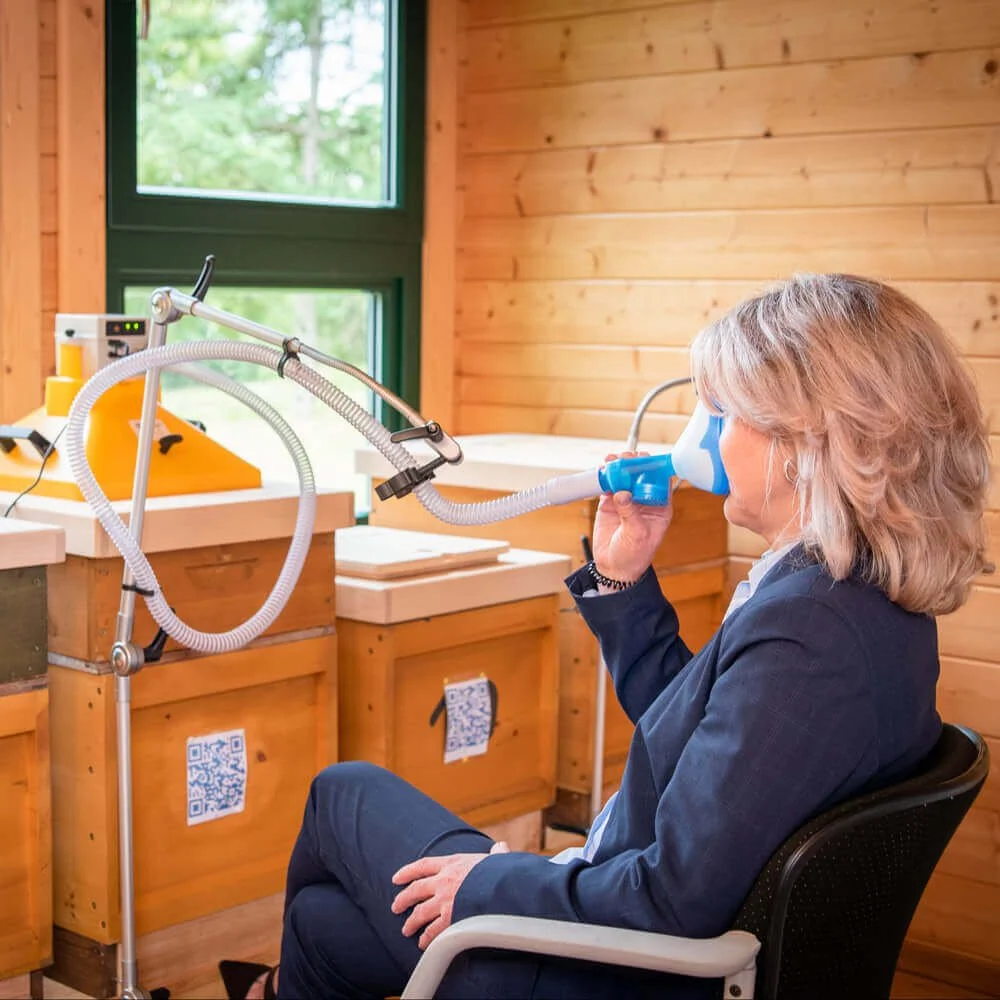
What are you hearing and feeling?
The characteristic hive “hum” is generated by:
Wing beats (roughly 200–250 Hz per bee)
Collective resonance of thousands of bees
Vibrations transmitted through wood, wax, and air
Inside the hive, this produces a layered field of:
Airborne sound waves
Mechanical vibrations through the hive structure
In effect, the hive is both an acoustic environment and a vibrational one.
Why People are Drawn to it
Interest in beehive air therapy often comes from a desire to return to simpler, time-tested practices. Supporters suggest it may help with:
Respiratory comfort (especially seasonal irritation)
Relaxation and stress reduction
A general sense of wellbeing
There is also something less measurable at play. Sitting beside a hive encourages a kind of attentiveness that is increasingly rare. The bees do not rush, and in their presence, neither do we.
The Science and Research
From a scientific standpoint, beehive air is not just “pleasant”—it is chemically complex.
Studies using gas chromatography–mass spectrometry (GC–MS) have identified over 50 volatile compounds present in hive air.
These include:
Terpenes (plant-derived aromatic compounds)
Aldehydes and alcohols
Short-chain fatty acids
Phenolic compounds
Many of these originate from propolis, beeswax, and plant resins gathered by bees.
A few specific compounds detected in measurable amounts include:
α-pinene
benzaldehyde
benzyl alcohol
methyl benzoate
benzoic acid
These are not random—they are the same types of compounds studied in plant essential oils and forest air, often linked to antimicrobial or anti-inflammatory effects.
One of the more interesting laboratory findings is that beehive air itself shows antimicrobial activity.
Modern research into vibroacoustic therapy (VAT)—used in clinical and therapeutic settings—offers a useful comparison.
Low-frequency sound (typically 20–120 Hz, though higher harmonics also matter) has been associated with:
Reduced stress and anxiety
Lower heart rate and blood pressure
Muscle relaxation
Improved perception of calm
These effects are thought to arise from:
Resonance within body tissues
Activation of the parasympathetic nervous system
Subtle entrainment of breathing and heart rhythms
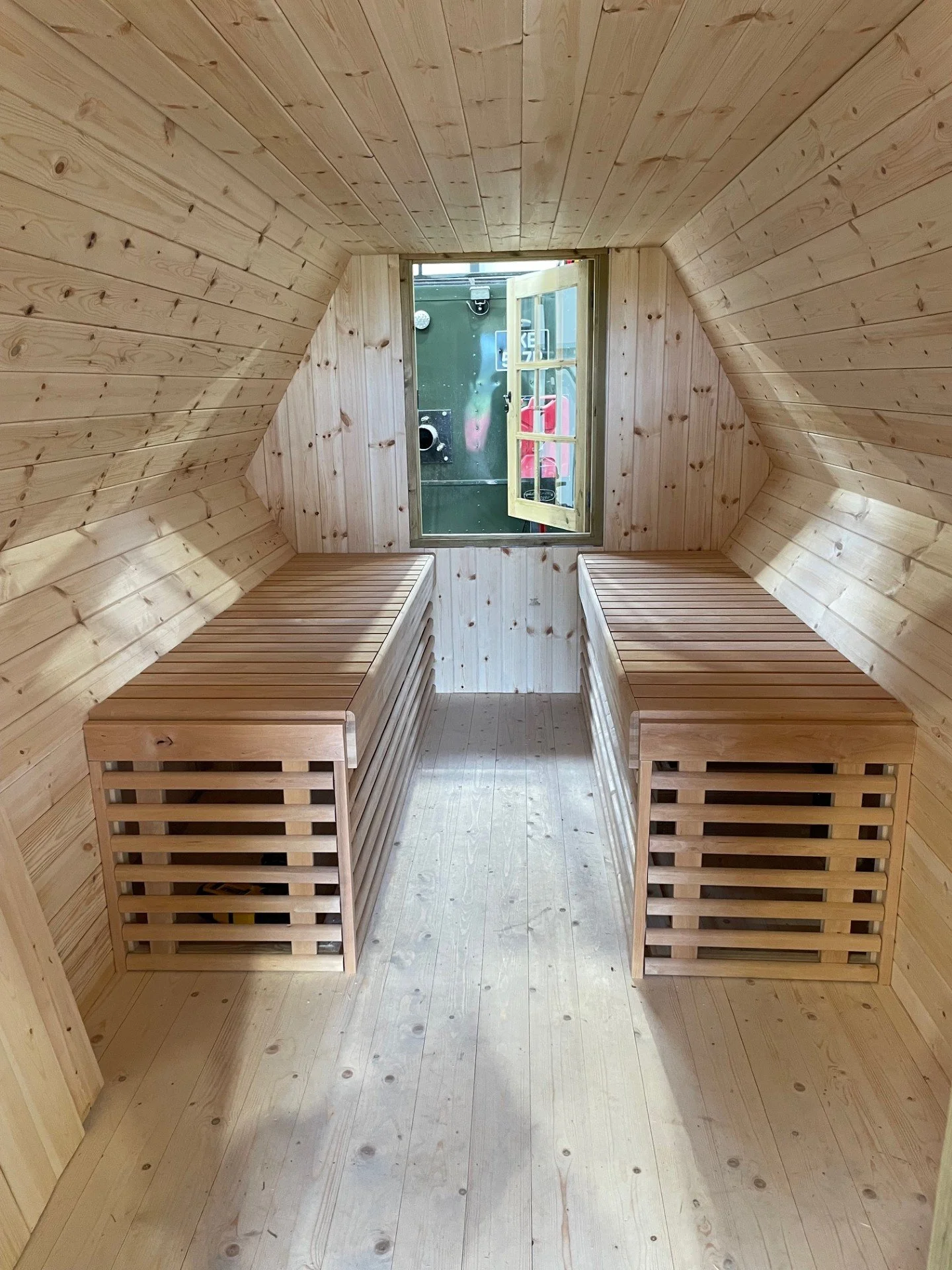
Why should you try a Beehive Air Experience?
When viewed as a whole, beehive air therapy is not just about what you breathe. It is a multi-sensory environment:
Chemistry – volatile compounds from propolis and wax
Temperature and humidity – stable, warm airflow
Sound and vibration – constant, living resonance
In a world that leans heavily on speed, screens, and synthetic solutions, the appeal of a beehive air experience is surprisingly straightforward: it offers something real, grounded, and time-tested.
It is not about chasing a miracle cure. It is about stepping briefly into a system that has worked, unchanged, for millions of years—and seeing what that does for you.
A healthy hive operates with quiet precision. Nothing is rushed, nothing wasted.
Spending time beside it encourages:
Slower breathing
Stillness of mind
A break from constant stimulation
There is value in simply matching pace with something that is not in a hurry.